

This is one of those questions people feel almost guilty asking. But if you’re sitting at a kitchen table trying to figure out what comes next for someone you love, it’s exactly the right question to be asking.
Families want to understand what they’re preparing for. They want to know how much time there might be. They want to know whether the decision they’re making is the right one, and whether the person they love will be cared for with dignity in their final years, or months, or weeks.
There’s no single honest answer to how long someone lives after entering a nursing home. The range is wide, and the factors that shape it are deeply personal. But there’s a lot we do know, and understanding it can help you make better decisions and carry a little less fear as you move forward.
What Average Stay Actually Means
When researchers talk about average nursing home stays, they’re mixing two very different groups of people together.
One group is there for short term rehabilitation. Someone falls and breaks a hip. They have a knee replacement. They survive a stroke and need intensive therapy before returning home. These people stay for days or weeks, not years. Their goal is recovery and discharge.
The other group is there for long-term residential care. These are seniors who can no longer safely live at home, even with support. They may have advanced dementia, serious heart or lung disease, or multiple conditions layered on top of each other. They’re not expected to go home. The nursing home becomes their home.
When you see figures like “the average nursing home stay is around 2.3 years,” that number blends both groups. For long-term residents specifically, the picture looks different. Many live there for three to five years or longer. Some for a decade or more. Others arrive in their final weeks of life and pass within months.
The number itself doesn’t tell you much. What matters is understanding the individual situation you’re dealing with.
Factors That Affect How Long Someone Lives in a Nursing Home
There’s no formula for predicting life expectancy after nursing home admission, but there are patterns that caregivers and medical professionals see consistently.
Age at Admission
This one is obvious, but worth stating clearly. Someone who enters a nursing home at 75 is in a very different situation than someone who enters at 92. Younger residents with manageable conditions may live there for many years. Older residents, especially those with frailty, weight loss, and declining function, may have a much shorter trajectory.
The Primary Diagnosis
A person admitted primarily for mobility limitations after a fall has a very different prognosis from someone admitted with end-stage heart failure or advanced Alzheimer’s disease. The underlying condition matters more than almost anything else.
Some conditions are stable and manageable for years. Others follow a more predictable decline. Understanding the disease trajectory helps families know what to expect and when to start having certain conversations.
The Presence of Multiple Conditions
Many seniors don’t arrive at a nursing home with just one problem. They come with diabetes and kidney disease and heart failure and arthritis. Each condition adds complexity. Multiple serious conditions together tend to shorten life expectancy and increase the chance of hospitalization, which itself can accelerate decline in older adults.
Functional Ability on Arrival
Researchers have consistently found that physical function at the time of admission is one of the strongest predictors of how long someone will live. Residents who can still walk, even with support, who can feed themselves, who can respond and communicate, tend to have longer life expectancy than those who arrive fully dependent.
Nutritional Status and Weight
Unintentional weight loss is a serious warning sign in older adults. It’s often a sign that the body is shutting down, that swallowing has become difficult, or that appetite has faded in ways connected to underlying illness. Residents who are significantly underweight or who are losing weight steadily tend to have more limited time.
Cognitive Status
Dementia is its own category. We’ll go into it more below, but it’s worth noting here that severe cognitive impairment affects almost every aspect of health, from the ability to communicate pain to the ability to eat safely to the frequency of infections. Dementia in its later stages is a terminal diagnosis, and that reality shapes the entire care picture.
Short Term Rehab vs. Long Term Residency: Why the Difference Matters
If your parents just had a hip replacement and are heading to a skilled nursing facility for a few weeks of physical therapy, the question of long-term survival doesn’t really apply to that stay. The goal is recovery. Most people in this situation go home.
But sometimes families discover during a rehab stay that going home isn’t safe anymore. Maybe the person’s condition is worse than expected. Maybe the home situation isn’t adequate. Maybe the person themselves realizes they’re not ready, and then that conversation shifts from a temporary plan to a longer one.
It’s worth being aware of this transition. Many families feel blindsided when a short rehab stay turns into a conversation about permanent placement. It helps to have thought about it before you’re in the middle of it.
Medicare pays for short term skilled nursing facility care under specific conditions. But long-term residential care is funded differently, usually through Medicaid once personal resources are spent down, or through private pay. If you’re starting to think about long-term placement in nursing homes in Auburn or elsewhere, getting clear on the financial picture early makes a real difference.
Health Conditions That Shape the Trajectory
Some conditions that lead to nursing home placement have relatively stable trajectories. Someone with Parkinson’s disease who enters a facility in the early-to-middle stages may live there for many years with a good quality of life. Someone with well-managed diabetes and controlled blood pressure may live another decade.
Other conditions are less forgiving.
Heart failure is one of the leading reasons for nursing home admission, and it carries a significant mortality rate in older adults, particularly when it reaches the point of requiring residential care. Chronic obstructive pulmonary disease, or COPD, follows a similar pattern. Kidney disease in its later stages often involves complex management and can accelerate overall decline.
Cancer, depending on the type and stage, may bring someone to a nursing home for end-of-life care. The trajectory there is usually shorter and more predictable.
What families often don’t realize is that it’s rarely one condition that causes death. It’s usually a cascade. A person with heart failure gets pneumonia. The infection worsens kidney function. The kidneys’ decline makes the heart failure harder to manage. The body can no longer compensate. This cascade is what the end of life looks like for most people in long-term care.
Understanding this helps families make sense of what they’re seeing, and it helps them know when hospice conversations might be appropriate.
Dementia, Memory Care, and What Families Should Know
Dementia deserves its own section because it follows its own path, and it’s one of the primary reasons people end up in residential care.
Alzheimer’s disease and other dementias are progressive. They don’t plateau. Over time, the person loses more and more function. In the later stages, they may be unable to recognize family members, unable to speak, unable to swallow safely, and unable to walk. At that point, they are completely dependent on others for every need.
The average survival from Alzheimer’s diagnosis to death is often cited as somewhere between three and eleven years, but that range reflects enormous variation. Some people progress rapidly. Others seem to plateau for long stretches before declining again. Genetics, physical health, and the quality of care all play a role.
What does good memory care look like in practice? It looks like staff who are trained to understand behavioral changes and respond with patience rather than frustration. It looks like environments designed to reduce disorientation. It looks like activities for dementia seniors in care homes that engage the senses and connect to the person’s history, things like music from their era, familiar photos, simple tasks they can still participate in. It looks like families who are supported, informed, and included.
Medicaid approved memory care facilities Auburn WA have specific requirements for staffing and care protocols designed to meet the needs of this population. When families are searching for memory care placement, understanding what those requirements actually mean day to day is important. Asking about staff training, behavioral management approaches, and how the facility handles agitation or wandering will tell you far more than any brochure.
How Quality of Care Shapes Life and Death
This is something families sometimes feel uncomfortable saying out loud: the quality of care a person receives matters to how long they live, and to how well they live while they’re alive.
Pressure ulcers, also called bedsores, are one of the most preventable causes of serious health deterioration in nursing home residents. They develop when immobile residents are not repositioned regularly. In advanced stages, they become infected. They cause pain. They can lead to sepsis and death. Facilities with good staff ratios and strong care protocols see far fewer serious pressure injuries.
Nutrition monitoring matters. Falls prevention matters. Medication management matters. Infection control matters. These are not abstract policy concerns. They are the day-to-day reality of long-term care, and they have direct consequences for residents’ health and longevity.
When families are choosing between local assisted living facilities Auburn WA or skilled nursing facilities, understanding how a facility handles these basics is more important than how nice the lobby looks. Ask about staffing ratios during the night shift. Ask how long the average caregiver has worked there. High turnover is a red flag. Stable, experienced staff deliver better care, and they notice changes in a resident’s condition before those changes become crises.
Emotional Well Being and Its Impact on Health
There’s a growing body of evidence that social connection and emotional well-being affect health outcomes, including in older adults. Loneliness and isolation are not just sad. They’re actually hard on the body.
Residents who feel engaged, who have meaningful interactions with staff and family, who have something to look forward to, tend to do better than those who feel abandoned or forgotten. This is one reason family involvement matters so much in long-term care.
A resident who receives regular visitors tends to get better advocacy. Staff naturally pay more attention to residents whose families are present and engaged. That’s just human nature. And residents who know they’re loved and remembered tend to maintain more motivation to eat, to participate, and to engage with the world around them.
If visiting is difficult because of distance or health, even phone calls and video calls can make a difference. Bringing photos, favorite music, familiar scents, these simple things reconnect a person to who they are. They matter more than people often expect.
How Different Care Settings Compare
Not everyone who needs long-term care ends up in a traditional nursing home. The landscape of senior care has evolved, and families have more options than many realize.
Large skilled nursing facilities offer 24-hour nursing care, on-site physical and occupational therapy, and the resources to manage complex medical needs. They’re the right setting for some people, especially those with high medical complexity.
Assisted living communities offer more independence. Residents typically have their own apartments or rooms and receive help with things like bathing, medications, and meals. They’re appropriate for people who need some support but don’t need intensive medical management.
And then there are smaller, more intimate settings. Adult family homes, also called residential care homes for seniors or board and care homes for seniors, are homes in residential neighborhoods where a small number of residents live together and receive care. These settings offer something the larger facilities often can’t: a genuinely home-like environment with consistent caregivers and a much lower staff-to-resident ratio.
For many families, particularly those looking for personal care homes for seniors or private care homes for seniors where their loved one will be known by name and seen as an individual, these smaller settings feel like the right fit.
Understanding Your Options in Auburn
Families looking at senior care in Auburn, Washington have a real range of options available to them. The area has skilled nursing facilities, assisted living communities, memory care units, and smaller residential care homes.
When searching for the best local care homes for seniors in the area, it helps to think carefully about what your loved one actually needs day to day. How much medical management do they require? Do they need memory care? How important is a home-like environment versus access to comprehensive therapy services? What does their budget or Medicaid eligibility look like?
Nursing homes in Auburn Washington can vary significantly in size, staffing, and specialization. Touring facilities, asking specific questions about staffing ratios and care protocols, and talking with current residents’ families can give you a much more accurate picture than any brochure.
For families specifically looking at adult family homes Auburn WA, these smaller residential settings offer continuity of care and genuine relationships between caregivers and residents. They’re often a particularly good fit for people with dementia, since the environment is less stimulating and disorienting than a large facility.
Adult Family Homes and the Case for Smaller Settings
One of the things families often don’t know when they start this process is that care homes for seniors come in very different sizes and models.
Adult family homes in Washington State are licensed residences, typically housing six or fewer adults who need care. They’re staffed around the clock and regulated by the state, but they operate more like a home than an institution.
Residents in these settings often have the same caregiver for months or years. That person knows their preferences, their history, their moods. They notice subtle changes. They know when something seems off. That continuity is enormously valuable in caring for older adults, particularly those with dementia.
At Cherished Acres Adult Family Home in Auburn, the focus is on exactly this kind of care. Small. Personal. Dignified. Families often say that what they valued most was not just the safety and medical support, but the genuine relationships that formed between their loved one and the people caring for them. Homes that care for seniors in this way give families a level of peace of mind that’s genuinely hard to find in larger facilities.
If you’re exploring residential care homes for seniors near me or looking for board and care homes for seniors near me in the Auburn area, it’s worth including adult family homes in your search. They’re not right for every situation, but for many families, they’re the closest thing to keeping a loved one at home.
What Families Should Focus on Instead of Time
Here’s something that comes from years of watching families navigate this process: the question of how long is rarely the most useful thing to focus on.
Time is uncertain. Medicine is uncertain. The body surprises us, in both directions. People expected to have months sometimes have years. People who seemed stable sometimes decline quickly. Holding tightly to a timeline can leave families unprepared for either outcome.
What tends to matter more is the quality of the days that are there. Is the person comfortable? Are their pain and anxiety managed? Do they have moments of joy, connection, recognition? Are they treated with respect? Do they have caregivers who see them as a full human being with a history and a personality, not just a set of medical needs?
These are the questions that families who’ve been through this process often say they wish they’d asked earlier. Not how many years, but what kind of days.
It also helps to think about what the family needs. Caregiving is exhausting. Grief is exhausting. It doesn’t start when someone dies. It starts long before that, sometimes years before. Families need support too. Finding that support, whether through a social worker, a counselor, a support group, or simply a community of people who understand, is part of getting through this well.
Common Questions Families Ask
What is the most common age for nursing home admission?
Most nursing home residents are 75 or older, with the average age of admission somewhere in the early to mid 80s. However, adults of any age can require nursing home care following serious illness or injury.
Does Medicare pay for long term nursing home care?
Medicare covers short term skilled nursing facility care under specific conditions, generally following a qualifying hospital stay. It does not cover long-term custodial care. Medicaid is the primary payer for long-term nursing home stays for those who qualify based on income and assets.
How do I know when it’s time to consider a nursing home or adult family home?
There’s no single trigger, but common signs include caregiver burnout, repeated hospitalizations, safety incidents at home like falls, inability to manage medications or meals independently, significant cognitive decline, and care needs that exceed what can be provided at home even with professional support.
Is assisted living the same as a nursing home?
No. Assisted living communities are for people who need help with daily activities but don’t require continuous skilled nursing care. Nursing homes, also called skilled nursing facilities, provide a higher level of medical care and are appropriate for people with more complex or intensive needs.
What should I look for when touring a care facility?
Pay attention to how staff interact with residents. Watch whether residents seem engaged or withdrawn. Ask about staffing ratios and turnover. Ask how they handle falls, infections, and pain management. Smell the environment. Talk to families of current residents if you can. The feeling of a place and the character of its staff tell you more than the marketing materials will.
Are there memory care options covered by Medicaid in Auburn?
Yes, some Medicaid approved memory care facilities Auburn WA accept Medicaid, though availability can vary and waitlists may apply. It’s worth connecting with a local elder law attorney or social worker who knows the Auburn area landscape to understand your specific options.
What’s the difference between hospice and a nursing home?
Hospice is a philosophy and a set of services focused on comfort care when curative treatment is no longer the goal. Hospice can be provided inside a nursing home or an adult family home. It brings in an additional layer of support including pain management, social work, chaplaincy, and bereavement services for families.
A Closing Word
If you’re asking how long someone survives in a nursing home, what you’re probably really asking is something more personal than that. You’re asking whether there’s enough time. Whether you’re doing the right thing. Whether they’ll be okay. Whether you’ll be okay.
Those are the questions underneath the question, and they don’t have simple answers.
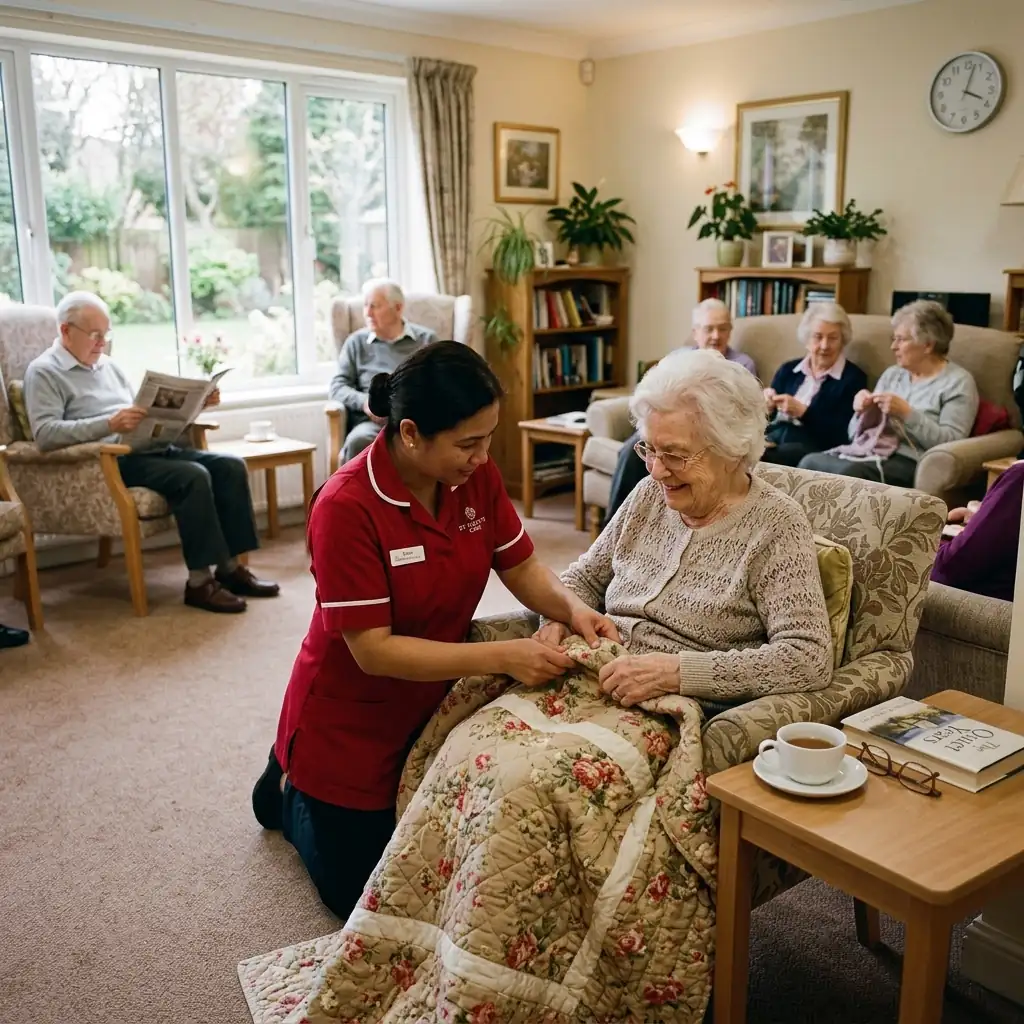
What I can say is this: the decision to place someone in a care home is rarely easy, and it’s rarely made lightly. Most families get there only after trying everything else. And when the right setting is found, with caregivers who are genuinely present and skilled and kind, something remarkable often happens. The person stabilizes. The family breathes. The focus shifts from survival to living.
That’s the goal. Not just length of life, but quality of it. Days that feel like something. Care that feels like something. Being known, and being cared for, by people who take the time to know you. Read more
If you’re exploring nursing homes in Auburn or looking into senior living Auburn WA options for someone you love, take your time. Ask hard questions. Trust what you see when you walk through the doors of a place. And know that you’re not alone in this.
Families do get through this. And often, the care their loved one receives in those final months or years is better than anything they feared when they started the conversation. Read more