

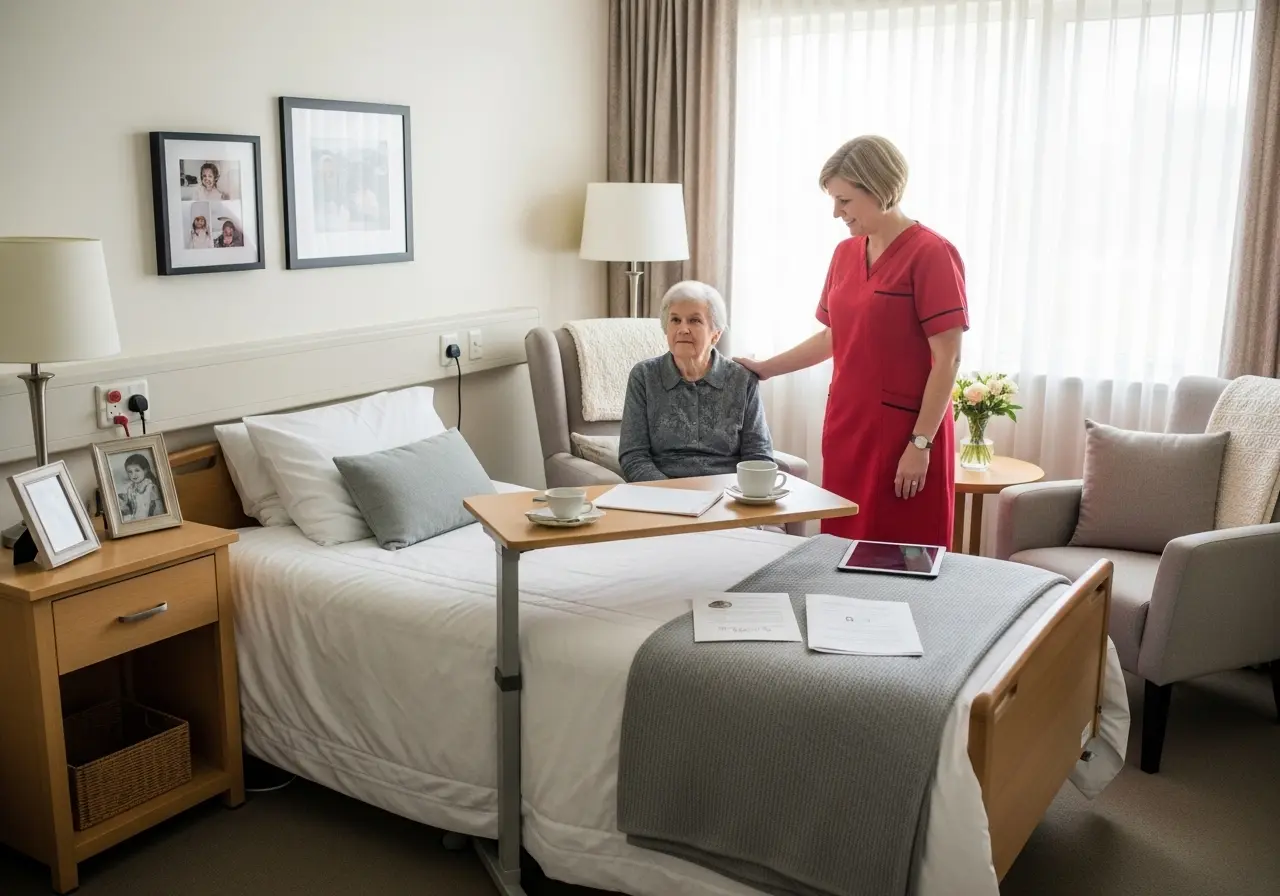
When the Question of Cost Comes First
Most families do not start thinking about assisted living costs until they have to. A parent falls. A diagnosis arrives. Suddenly you are searching for answers, trying to figure out what care looks like and what it costs, often in the same week.
One of the first questions families ask is whether their loved one can have their own room. Privacy matters. Dignity matters. And a private room in an assisted living setting can make a real difference in how comfortable and at home a senior feels.
But private rooms cost more. And understanding exactly how much, and why, takes a little unpacking.
This guide walks through what you can realistically expect to pay for a private room in assisted living, what affects that number, and how different care settings compare. The goal is simple: help you make a clear headed decision during a stressful time.
Average Cost of Private Rooms in Assisted Living
Nationally, the median cost of a private room in assisted living sits somewhere in the range of $4,500 to $6,500 per month. But that number can vary widely based on where you live, what type of facility you choose, and how much care your loved one needs.
In Washington State, costs tend to run a bit higher than the national average. Families looking at private rooms in assisted living in or near Auburn can expect monthly rates anywhere from $4,800 to over $7,500, depending on the level of care and the specific community.
A few things to understand right away:
That monthly figure usually covers rent, meals, and basic care services. Extra care needs, medications, and specialized services are typically billed separately. Adult family homes often offer a different pricing structure than large assisted living facilities.
The number you see advertised is rarely the final number. There are almost always add-ons. This guide will help you understand what is included and what is not.
What Is Included in Private Rooms in Assisted Living
When you pay for a private room in assisted living, you are not just paying for four walls and a bed. Most communities bundle a range of services into the base rate. Understanding what is bundled, and what is not, is one of the most important steps in comparing options.
Standard inclusions in most assisted living private rooms:
Private bedroom, sometimes with a private bathroom. Three meals per day in a shared dining room. Housekeeping and laundry services. Basic safety monitoring and emergency call systems. Activity programs and social events. Assistance with daily tasks such as bathing, dressing, and grooming. Transportation for medical appointments, in some cases.
Some facilities also include utilities like electricity, water, and cable TV. Others itemize these and charge separately.
What is rarely included in the base rate:
Medications and medication management fees. Physical therapy or occupational therapy. Memory care or dementia specific programming. Incontinence supplies. Personal care items like toiletries and clothing.
Always ask for a line by line breakdown before signing anything. The monthly rate is a starting point, not the complete picture.
What Affects the Cost of Private Rooms
No two quotes are the same, and the reasons come down to a few consistent factors.
Level of Care Needed
This is the biggest driver. A senior who is mostly independent and just needs help with meals and some light assistance will pay much less than someone who needs full assistance with bathing, toileting, mobility, or medication management.
Many facilities use a tiered care model. They assess each resident at move in and assign them a care level. As care needs increase, so does the monthly bill. This is not a hidden fee exactly, but families are sometimes surprised when the rate changes after a reassessment.
Room Size and Location Within the Building
A corner room with a garden view costs more than an interior room. A larger suite costs more than a standard room. Even within the same building, private room prices can vary by several hundred dollars a month just based on size and placement.
Facility Type and Amenities
A luxury assisted living community with a salon, fitness center, and concierge services will charge more than a modest, well run community with basic amenities. Neither is necessarily better for your loved one. It depends on what they value and what they actually need.
Staffing Ratios
Higher staff to resident ratios mean more attention and better care, but they also mean higher operating costs that get passed on to residents. Smaller homes, like adult family homes, often have better ratios and sometimes lower costs for the level of care provided.
Location Differences: What to Expect in the Auburn, WA Area
Geography matters a lot when it comes to senior care pricing. Urban areas and suburbs with higher costs of living tend to have higher care costs. Rural areas can be significantly cheaper, but access to medical services and specialists may be more limited.
For families exploring private rooms for seniors in Auburn WA, the picture looks like this: Auburn sits in the south end of the Seattle metro area, which puts it in a mid to higher cost zone. It is not as expensive as Seattle proper, but it is not rural pricing either.
The Auburn area has a mix of large assisted living facilities, smaller residential care homes, and adult family homes. Each comes with a different price point and a different kind of environment.
Large assisted living facilities in the Auburn area often charge between $5,500 and $7,500 per month for a private room, depending on care level. Adult family homes in the same area can sometimes offer comparable or even higher levels of care at lower monthly rates, especially for seniors who need more hands on help.
For families considering senior living Auburn WA options, it helps to look beyond the headline monthly rate and compare what each setting actually provides per dollar.
Private Room vs. Shared Room: How Costs Compare
Shared rooms are less common in assisted living than they used to be, but some communities still offer them. They typically cost $500 to $1,500 less per month than a private room in the same facility.
Here is a rough comparison:
- Shared Room (Assisted Living): $3,500 to $5,500 per month. Lower cost, shared bathroom, less privacy.
- Private Room (Assisted Living): $4,800 to $7,500 or more per month. Personal space, own bathroom often included.
- Private Room (Adult Family Home): $4,000 to $7,000 per month. More intimate setting, higher staff ratio.
- Nursing Home Private Room: $8,000 to $12,000 or more per month. Highest level of medical care.
Most families find that the privacy and peace of mind that comes with a private room is worth the extra cost, especially for seniors who are used to living alone or who have memory issues that make sharing a room disruptive.
Shared rooms can work well when two siblings or close friends choose to live together, or when a senior genuinely prefers company. But forced room sharing with a stranger is often harder on seniors than families anticipate.
Furnished Rooms for Seniors: What You Actually Get
Some private rooms in assisted living come furnished. Others are empty shells that families need to equip themselves. This distinction matters more than most people realize.
Furnished rooms for seniors typically include a bed frame and mattress, a dresser or chest of drawers, a small table or desk, a chair or two, and basic window coverings.
They do not usually include personal items, decorative touches, or specialty items like lift chairs or hospital style adjustable beds.
Some families prefer unfurnished rooms because they want their loved one to have familiar items from home. A favorite recliner. Family photos. A quilt they have slept under for 30 years. These things matter for comfort and identity.
If the room is furnished, ask specifically about the quality and age of the furniture. Some facilities furnish rooms beautifully. Others have furniture that has seen better decades.
When choosing between furnished and unfurnished, also think practically. Moving furniture in and out of a care setting has logistical complications. If your loved one moves multiple times over the years, furnished rooms can simplify things significantly.
Adult Family Homes vs. Assisted Living Costs
This comparison gets overlooked by a lot of families, and it is worth slowing down on.
Assisted living facilities are typically large communities with dozens or even hundreds of residents. They offer lots of programming, amenities, and a social atmosphere. They are licensed and regulated differently than smaller care homes.
Adult family homes in Auburn WA are licensed residential homes that provide care for a small number of residents, usually six or fewer. They operate in actual houses in real neighborhoods. Residents often have private bedrooms, shared common areas, and around the clock care from a small, consistent care team.
The cost comparison is nuanced. Adult family homes may charge a similar or even higher monthly rate than assisted living for the same level of care, but what families often find is that the care is more consistent and more personalized. Fewer care transitions. Caregivers who actually know your loved one by name and by habit.
For seniors who need more intensive help, an adult family home can sometimes provide skilled care at a lower cost than a nursing home, which is the next level up. Nursing homes in Auburn WA tend to run significantly higher, often $8,000 to $12,000 or more per month for a private room.
When you are comparing assisted living facilities in Auburn WA to adult family homes, it is worth visiting both types before making a decision. The experience of walking into a home like setting versus a larger institutional facility is telling, and families often have a clear gut reaction.
Homes like Cherished Acres Adult Family Home in Auburn serve as a good example of this model. Small, residential, and focused on individualized care rather than a one size fits all approach.
Hidden or Additional Costs Families Should Know About
This section might be the most important one in this entire post. The monthly rate is not the whole story. Not even close.
Here are costs that catch families off guard:
Community or Move In Fees
Many assisted living facilities charge a one time community fee when a resident moves in. This can range from a few hundred dollars to several thousand. It is sometimes refundable, often not, and rarely waived.
Care Level Reassessments
When a resident’s care needs increase, many facilities conduct a reassessment and bump the monthly rate to a higher care tier. This can happen gradually or suddenly after a hospitalization. The increase can be $300 to $1,000 or more per month.
Medication Management
Some facilities include medication management in the base rate. Many do not. Having staff administer medications can cost an extra $100 to $500 per month on top of the room rate.
Incontinence Supplies
These are almost never included in the base rate. The cost of supplies plus any additional personal care related to incontinence can add $200 to $400 per month.
Transportation
Some communities include transportation to medical appointments. Others charge per trip. If your loved one has frequent appointments, this adds up.
Guest Meals
Visiting family members who want to eat with a resident are usually charged for meals. Small thing, but worth knowing.
The best way to protect yourself from surprise bills is to request an itemized rate sheet and ask explicitly: is there anything that would cause the monthly rate to increase? Then listen carefully to the answer.
Ways to Pay for Assisted Living
Cost is real, and not every family has unlimited resources. Here is an honest look at how most families pay for private room assisted living care.
Private Pay (Personal Funds)
Most residents in assisted living pay out of pocket, at least initially. This means drawing on savings, retirement accounts, Social Security income, and pension payments. Selling a family home often provides the funding to start.
Long Term Care Insurance
If your loved one purchased a long term care insurance policy years ago, now is when it kicks in. Policies vary widely in what they cover and how much, so read the policy carefully and contact the insurer early. There is usually an elimination period before benefits begin.
Veterans Benefits
Veterans and surviving spouses may qualify for the Aid and Attendance pension benefit through the VA. This monthly benefit can be significant, sometimes $1,000 to $2,200 per month, and is often underutilized because families do not know about it.
Medicaid
Medicaid can help cover assisted living costs for seniors who meet income and asset requirements. In Washington State, the Medicaid program for seniors is called Apple Health, and there are specific waiver programs that may apply to assisted living or adult family homes. Eligibility requirements are strict, and the application process takes time.
Life Insurance Conversions and Bridge Loans
Some families convert a life insurance policy into long term care funding through a life settlement or policy conversion. Senior care bridge loans are another option to cover costs while waiting for a home to sell or benefits to kick in.
If you are not sure what resources your loved one has available, a senior care financial advisor or a certified elder law attorney can help you understand the options without pressure.
When a Private Room Is Worth the Cost
Not every senior needs or wants a private room. But for many, it is not a luxury, it is a necessity.
Consider choosing a private room when your loved one has always valued privacy and would find shared living deeply stressful. When they have memory issues and sharing a room with a stranger would be confusing or agitating. When they are a light sleeper and need control over their environment. When they have a medical condition that requires more personal space or equipment. When they simply need a space to call their own during a difficult transition.
There is also a dignity piece here that is hard to put a dollar amount on. For someone who has lived independently for 50 or 60 years, having their own room, their own small sanctuary, matters deeply. It can be the difference between adjusting to a new chapter and feeling like they have lost everything.
That said, if the cost of a private room creates genuine financial hardship that threatens long term care sustainability, it is worth having an honest conversation about what level of privacy is truly needed versus what would be adequate.
Comparing Options in Auburn Senior Living
The Auburn area gives families a decent range of options, which is good because no single type of care fits every situation.
When exploring private rooms for seniors in Auburn WA, you will generally encounter large assisted living communities with robust activity programs and multiple care levels on site, smaller boutique assisted living facilities with fewer residents and a quieter atmosphere, and adult family homes that offer residential style care with small resident populations.
Each has real advantages. Large facilities tend to have more social programming, on-site therapy services, and the infrastructure to handle changing care needs without a move. Smaller homes tend to offer more consistent staffing, a quieter environment, and sometimes more flexibility in how care is delivered.
Families often find it helpful to visit at least two or three options before deciding. Call ahead, ask for a tour at a time when residents are active, and pay attention to how staff interact with residents when they do not know they are being observed.
For families specifically considering assisted living Auburn WA options, the south King County area also has access to good medical infrastructure, which matters when your loved one has ongoing health needs.
Questions Families Should Ask About Pricing
Before you commit to anything, get clear answers to these questions:
What is included in the monthly rate? Can you give me a written itemized list? Are there any one time fees, like a community fee or move in fee? How often do rates increase, and how much notice do you give? What triggers a care level reassessment, and how much would a higher care level cost? Is medication management included or billed separately? What happens if my loved one runs out of money? Do you have Medicaid beds? What is your policy on room changes if health needs increase? What is the staff to resident ratio on days, evenings, and overnight?
A good community will answer these questions openly and without defensiveness. Hesitation or vague answers are a red flag.
Frequently Asked Questions
How much does a private room in assisted living cost per month?
Nationally, most private rooms in assisted living run between $4,500 and $7,500 per month, though luxury communities can cost more. In the greater Auburn, WA area, expect monthly costs in the range of $4,800 to $7,500 or higher, depending on care needs and the specific community.
Does Medicare cover private rooms in assisted living?
No. Medicare does not cover assisted living costs. It may cover short term skilled nursing care after a qualifying hospital stay, but it does not pay for ongoing assisted living room and board. Most residents pay privately, through long term care insurance, or through Medicaid if they qualify.
What is the difference between assisted living and a nursing home?
Assisted living is for seniors who need help with daily activities but do not require constant medical supervision. Nursing homes provide a higher level of medical care and are staffed with licensed nurses around the clock. Nursing homes cost significantly more, often over $8,000 to $10,000 per month for a private room.
Are furnished rooms for seniors available in adult family homes?
Many adult family homes offer furnished private rooms, though the level of furnishing varies. Some include a bed, dresser, and basic furniture. Others offer the room unfurnished so families can bring familiar items from home. Always confirm what is provided before move-in.
How is pricing different in an adult family home compared to a large assisted living facility?
The monthly rates can be similar, but the value proposition is different. Adult family homes tend to offer more individualized attention and a home like setting. Large facilities often provide more programming and the ability to age in place through multiple levels of care. For seniors with higher care needs, adult family homes sometimes offer better care per dollar than a nursing home alternative.
Can room rates change after a loved one moves in?
Yes, and families should be prepared for this. Annual rate increases are common. Care level reassessments can also trigger cost increases. Ask about both when touring and get the rate increase policy in writing.
A Final Word for Families Going Through This
The cost of care is real, and it weighs heavily on families. There is no easy answer, and there is rarely a perfect option. But understanding what you are paying for, and why, makes the whole process less overwhelming.
A private room in assisted living is more than just a cost line. It is where your loved one will sleep, rest, keep their things, and spend quiet hours. Getting that right matters.
Whether you are just beginning to explore private rooms for seniors in Auburn WA or you have already toured a few places and are comparing numbers, take your time. Ask the hard questions. Do not be afraid to push back when something does not add up.
The right place is out there. You will know it when you find it, not just by the price, but by how it feels when you walk through the door. Read more