

Introduction
When a family starts thinking about senior living options, one of the first questions that comes up is simple but important: will my loved one have their own room?
It sounds like a small thing. But for many seniors, having a private space makes a real difference. It affects how comfortable they feel, how well they sleep, how much dignity they hold onto, and honestly, how happy they are day to day.
This guide walks through everything families need to understand about private rooms in nursing homes and assisted living settings. What they include, what they cost, how they compare to shared rooms, and what questions to ask before choosing one.
What Is a Private Room in a Nursing Home?
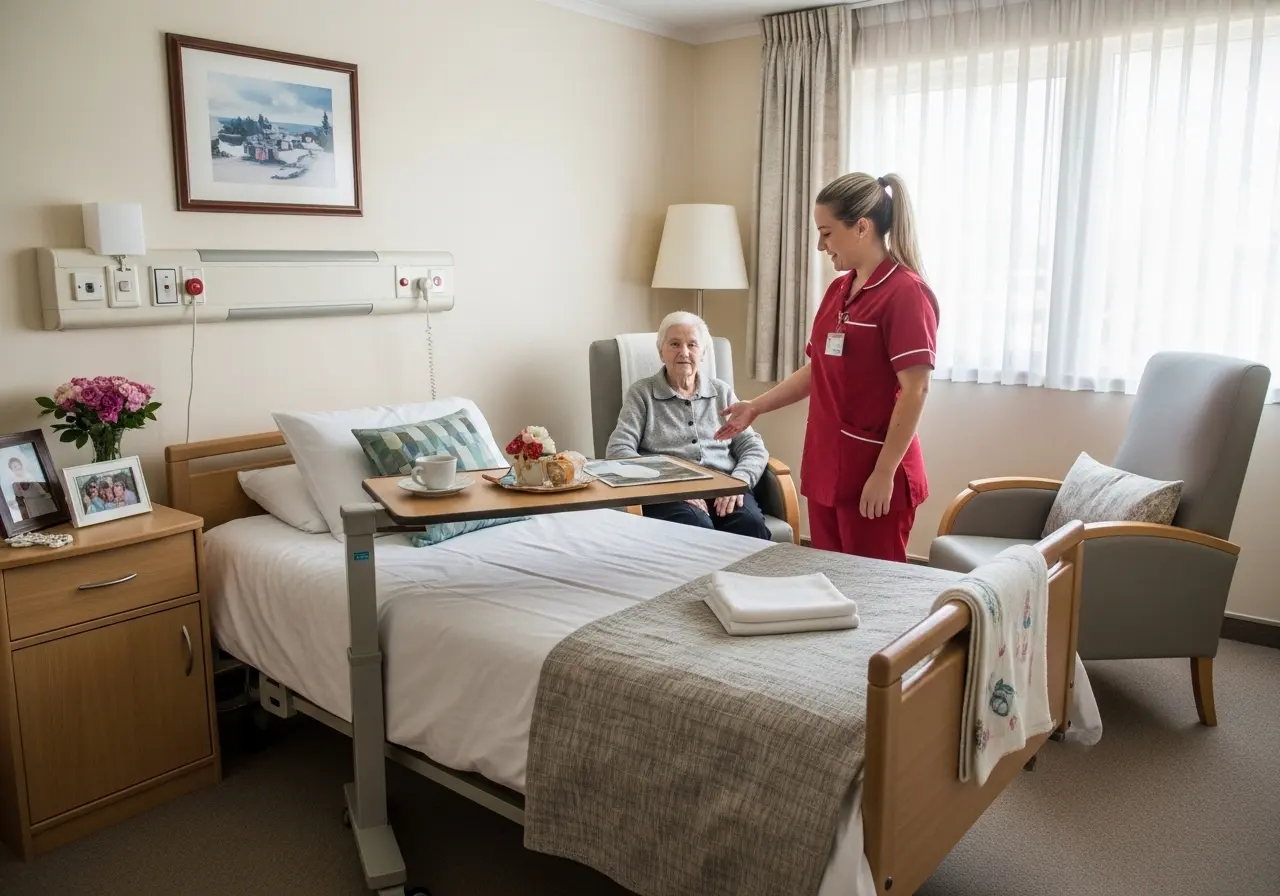
A private room in a nursing home or assisted living community is simply a bedroom that one resident uses alone. No roommate. No shared sleeping space.
The resident still lives in a communal building and shares common areas like dining rooms, lounges, and outdoor spaces. But when they close the door to their room, that space is entirely theirs.
In most facilities, a private room includes a bed, some storage space, and a private or semi private bathroom. Some rooms are larger, some are smaller. The level of comfort varies quite a bit depending on the facility.
This is different from a shared room, where two residents live together and divide the space, often separated only by a curtain or a partial wall.
For many seniors, especially those who have lived independently for decades, the idea of sharing a room with a stranger can feel like a significant loss of privacy. A private room helps preserve a sense of normalcy and personal space during what is already a big life transition.
Features of Assisted Living Private Rooms
Not every private room looks the same. The features depend on the type of facility, the price point, and the level of care being offered.
That said, most private rooms in assisted living and nursing home settings share some common features.
- Personal space with a lockable door: The resident can come and go within the facility, but their room is their own. This matters more than people often realize. Having a door that closes offers a basic level of privacy and security.
- A private or attached bathroom: Many private rooms come with a bathroom attached. Some facilities have semi private bathrooms shared between two private rooms. Either way, seniors in private rooms typically do not have to share bathroom facilities with multiple people.
- Enough room for personal belongings: A dresser, a closet, space for photos and keepsakes. These small things help a room feel like home rather than a hospital.
- Temperature and lighting control. In many private rooms, seniors can adjust the temperature or lighting to suit their preferences without negotiating with a roommate.
- Space for family visits: A private room gives families a comfortable, quiet place to sit together. This makes visits feel more natural and personal.
In higher end communities, private rooms may also include a small living area, a kitchenette, or a private patio. The variety is wide, so it is worth visiting several facilities before making a decision.
Benefits of Having a Private Room
There are practical reasons why families often seek out private room assisted living, but the benefits go beyond just personal preference.
- Better sleep quality: Shared rooms mean shared schedules. If a roommate wakes early or keeps the television on at night, sleep is disrupted. In a private room, a senior sleeps on their own schedule without interruption.
- Fewer infections: Particularly for seniors with compromised immune systems, sharing a room with another person increases the risk of catching illnesses. This became especially clear in the years following the COVID 19 pandemic, and many families now think carefully about this when choosing a placement.
- Reduced stress and anxiety: Adjusting to life in a care facility is emotionally hard. Having a private space to retreat to, to process feelings, or simply to rest can ease that transition significantly.
- More control over daily life: When a room is shared, small decisions become negotiations. What to watch on TV. When the lights go off. Whether the window is open. In a private room, the senior is in charge of these things. That sense of control matters a great deal for emotional well being.
- Easier for families to personalize the space: Families can bring in a favorite chair, hang familiar artwork, and set up the room in a way that reminds their loved one of home. This is much easier to do in a private space than in a shared one.
Furnished Rooms for Seniors and What to Expect
One question families often ask is whether the room comes furnished or whether they need to bring furniture.
The answer depends on the facility. Some communities offer fully furnished rooms for seniors, which means the bed frame, mattress, dresser, and basic furniture are all provided. Others offer unfurnished or semi furnished rooms, leaving families to bring items from home.
Furnished rooms can be a real advantage for families who are transitioning a loved one quickly, or for those who do not want to move large furniture. But there is also something meaningful about having familiar pieces from home in a new space.
If the room comes furnished, ask whether the furniture can be removed or supplemented. Many facilities are flexible and understand that a favorite armchair or a familiar bedside lamp can help a senior feel settled.
Also ask about what else is included. Does the room have a television? Is there a phone line? Is Wi Fi available? Are window coverings provided? These details add up and affect how comfortable the space will feel day to day.
Private Rooms vs. Shared Rooms
Both options have their place. Shared rooms are not inherently bad, and some seniors actually do better with a roommate. But the differences are worth understanding clearly.
- Privacy: A private room offers complete privacy. A shared room, even with dividers and curtains, does not. Personal conversations, family visits, and everyday activities all happen within earshot of another person in a shared room.
- Noise: Shared rooms are noisier. A roommate’s television, phone calls, medical equipment, or nighttime restlessness can all affect the other resident’s sleep and comfort.
- Relationships: Some seniors form genuine friendships with roommates, and that companionship can be a real benefit. Others find the arrangement stressful, particularly if personalities or schedules clash.
- Dignity: Needing help with personal care tasks like bathing or using the restroom is difficult enough. Having that happen in a shared room, even with staff doing their best to maintain privacy, can feel undignified.
- Flexibility: A private room gives families more freedom to personalize the space and more control over the environment.
For families weighing the options, it often comes down to the individual. A social senior who needs to save money may do well in a shared room. A senior who values their independence and personal space, or who has health conditions that benefit from reduced exposure to others, may be much happier in a private room.
Cost Differences and What Affects Pricing
Private rooms cost more than shared rooms. That is straightforward. The exact difference varies widely depending on the location, the type of facility, and the level of care included.
In general, a private room in an assisted living community can cost anywhere from a few hundred to over a thousand dollars more per month than a shared room in the same facility. Some families find this is worth it. Others need to work with what the budget allows.
Several factors affect the price of a private room.
- Location: Senior care costs in urban areas tend to be higher than in smaller towns. Senior living in Auburn WA, for example, may be priced differently than care in downtown Seattle. Local costs reflect local real estate and staffing expenses.
- Type of facility: A large corporate nursing home, a smaller assisted living community, and an adult family home all have different cost structures. Adult family homes in particular often provide a more affordable path to private room living because of their smaller size and lower overhead.
- Level of care needed: The more medical or personal care a resident requires, the higher the base cost is likely to be. Room type is just one piece of the total pricing picture.
- What is included: Some facilities bundle meals, activities, laundry, and utilities into a flat monthly rate. Others charge for these separately. Always ask what is included in the quoted price.
For families who cannot afford a private room at a large facility, adult family homes can be an excellent alternative. They are smaller, often more personal in their approach, and sometimes offer private rooms at a cost that competes with shared rooms at larger facilities.
Privacy, Comfort, and Emotional Well Being
It is easy to focus on the practical features of a room. But the emotional side of this decision matters just as much, if not more.
Seniors who move into care settings are often leaving behind a home they have lived in for decades. They are giving up independence in ways that can feel disorienting and painful. Having a space that feels like their own, even a small one, helps soften that transition.
There is real dignity in being able to close a door. In waking up without someone else’s alarm going off. In deciding when the lights come on in the morning. These things seem small from the outside, but for someone adjusting to a major life change, they are not small at all.
Research on seniors in nursing homes consistently points to privacy and personal space as key factors in emotional well being and life satisfaction. Residents who feel they have control over their environment tend to be more engaged, more willing to participate in activities, and less likely to experience anxiety or depression.
For families choosing care for a loved one, this is worth keeping in mind. The right room is not just a physical space. It is a foundation for how that person will feel about their new home.
Safety and Care Support in Private Rooms
Some families worry that a senior in a private room might be more isolated or harder for staff to monitor. This is a fair concern, and it is worth asking about directly.
Good facilities have care protocols that ensure regular check ins regardless of room type. Staff should be visiting residents throughout the day to assist with medications, meals, personal care, and general well being. A call system or emergency pull cord in the room and bathroom is standard in quality facilities.
In some ways, private rooms actually make care easier. Staff can speak privately with a resident about personal health matters without worrying about a roommate overhearing. Sensitive conversations about hygiene, pain, or emotional health happen more comfortably in a private setting.
Memory care units sometimes take a different approach, and for residents with significant cognitive decline, shared rooms or open observation settings may be recommended. But for most assisted living residents, a private room does not create barriers to good care.
Ask the facility how they check on residents in private rooms. Ask about emergency response times and how they ensure no one goes unattended for too long. These are reasonable questions, and a quality facility will have clear answers.
Comparing Senior Living Options in Auburn
For families exploring senior care in Auburn WA, there are several types of facilities to consider. Large assisted living communities, skilled nursing facilities, memory care centers, and adult family homes all operate in the area.
Each one has a different feel and a different care model. Larger facilities often have more amenities: activity rooms, therapy services, beauty salons, organized outings. But they can also feel institutional, and the staff to resident ratio is typically much higher than in a smaller setting.
Local assisted living facilities in Auburn WA vary quite a bit in terms of size, amenities, and approach. Visiting a few different types helps families understand what their loved one actually needs versus what looks appealing in a brochure.
Nursing homes in Auburn tend to offer a higher level of medical care for residents who need skilled nursing oversight. They are the right choice for some seniors, but not the only choice for those who primarily need help with daily activities rather than complex medical management.
The Role of Adult Family Homes
Adult family homes are a type of senior care setting that many families overlook, but they deserve serious consideration.
These are licensed residential homes, often in regular neighborhoods, that care for a small number of residents, typically six or fewer. Residents live in a home like setting with caregivers who often get to know each person quite well.
Adult family homes in Auburn WA frequently offer private rooms as a standard part of their model. Because the homes are smaller, the overall environment tends to feel more personal and less clinical.
Cherished Acres Adult Family Home, based in Auburn, is one example of this type of care. Small home settings like this often allow for a higher level of individualized attention, which many families find valuable when their loved one needs consistent, familiar caregivers rather than rotating staff in a large facility.
For families weighing private room assisted living options, adult family homes are worth including in the search. The combination of private space, small scale care, and personalized attention can be a genuinely good fit for many seniors.
Questions Families Should Ask Before Choosing a Room
Before committing to any facility or room type, it helps to have a clear list of questions ready. Here are some of the most important ones.
Is the room truly private, or is the bathroom shared?
Some facilities advertise private rooms but share bathrooms between two rooms. Know what you are actually getting.
What furniture is provided, and what can we bring?
Clarity here prevents surprises on move in day.
How are emergencies handled in private rooms?
Ask about call systems, response times, and nighttime protocols.
Can the room be personalized?
Hanging pictures, bringing furniture, having a pet in some cases. Know what the facility allows.
What does the monthly rate actually include?
Meals, laundry, medications, activities. Get a detailed breakdown in writing.
What happens if the resident’s care needs increase?
Will they need to move rooms or move facilities? Understanding this early prevents painful disruptions later.
How often do staff check in on residents?
Especially important for seniors who spend more time in their rooms.
Can the room be changed if it is not the right fit?
Some facilities have waiting lists for private rooms. Knowing the process for switching rooms is helpful.
Frequently Asked Questions
Is a private room in assisted living always more expensive?
Almost always, yes. Private rooms cost more than shared rooms in the same facility. The difference varies, but families should budget for a higher monthly rate. Some facilities, like adult family homes, may offer private rooms at rates that are competitive with shared rooms at larger communities.
What is included in a furnished room for seniors?
This varies. Typically, furnished rooms include a bed, mattress, dresser, and sometimes a chair or small table. Ask the facility for a specific list. Many families choose to supplement furnished rooms with personal items from home.
Can a senior decorate their private room?
Most facilities encourage personalization and understand it helps residents feel at home. There are usually some limits, such as not being able to paint walls, but hanging photos, bringing decorative items, and arranging furniture is generally welcomed.
Is a private room better for someone with memory issues?
Not always. Some seniors with dementia feel less anxious with a roommate present. Others do better with the calm and consistency of a private space. It depends on the individual, and memory care specialists can help families think through what would work best.
What is the difference between a nursing home private room and one in assisted living?
Nursing homes provide a higher level of medical care and are licensed accordingly. Assisted living communities offer support with daily activities but less intensive medical supervision. Private rooms exist in both settings. The level of care needed, not the room type, is usually the deciding factor in which setting is appropriate.
Can Medicaid pay for a private room?
In most cases, Medicaid covers the cost of a shared room in a nursing home, not a private room. If a resident wants a private room, the cost difference is often paid out of pocket. There are exceptions, and it is worth asking the facility and a Medicaid advisor directly.
Closing Thoughts
Choosing a room for a parent, grandparent, or spouse is one of the harder things a family does. There is no perfect answer, and the right choice depends on the person, the budget, and what is available in your area.
But if there is one thing worth remembering, it is this: the room matters. Not just as a physical space, but as the place where your loved one will sleep, rest, grieve, laugh with family, and find their footing in a new chapter of life.
A private room, when it is the right fit, offers something real: a place to close the door. A place that belongs to them. That quiet dignity counts for a lot.
If you are exploring private room assisted living options or want to learn more about what senior care in Auburn can look like in a smaller, home based setting, it is worth taking the time to visit your options in person. Talk to staff. Sit in the common areas. See how the residents look when they move through the space.
The right place will feel like it fits. Trust that. Read more